

How Do I Sell My Business to a Key Employee When They Don’t Have Any Money?
A practical guide to business exit planning, succession planning, and selling to the people who already know your company best.
The Fear Behind “How Do I Sell My Business?”
If you’re like many owners planning a business exit in the next 3–5 years, your ideal buyer isn’t a private equity firm. It’s the key employee who already runs half the show.
There’s just one problem: they don’t have the money.
You may be asking:
How do I sell my business to someone who can’t write a big check?
What if my preferred buyer simply can’t afford it?
Does that mean I have to find a stranger to take over?
These questions sit at the center of real business exit planning. They’re not only technical questions; they’re emotional ones. You want to leave your business in good hands, protect your team, and still capture the value you’ve built.
The good news: with the right succession planning and deal structure, a key‑employee sale is often far more realistic than it looks at first glance.
Why a Third‑Party Buyer Isn’t Always the Best Exit
The Third‑Party Sale Reality Check
When owners first think about how to sell a business, they often picture a third‑party buyer: a competitor, a strategic buyer, or an investment group. For larger companies, that can be a great outcome.
But if your business ranges between $5M–$15M in value, the reality can be tougher:
Fewer qualified buyers who truly understand your industry.
Harder negotiations on price, terms, and control.
Less interest in preserving your team and culture.
Why Key Employees Often Make the Best Successors
In many business exit planning conversations, the strongest succession planning answer is closer than you think. A key employee usually:
Knows your customers and operations inside and out.
Already carries major responsibility.
Cares about your people and reputation.
Understands your Company’s culture and sees the value in preserving it.
So if they’re the obvious successor, but can’t afford a traditional buyout, it’s time to look at different ways to structure the sale.
The Big Mindset Shift — Your Company Is the Wallet
Stop Looking at Your Employee’s Bank Account
When you look at your key employee (or a key employee group), you probably see talent, loyalty, and leadership. Then you look at the value of your company and think, “There’s no way they can afford this.”
Here’s the mindset shift I want you to make:
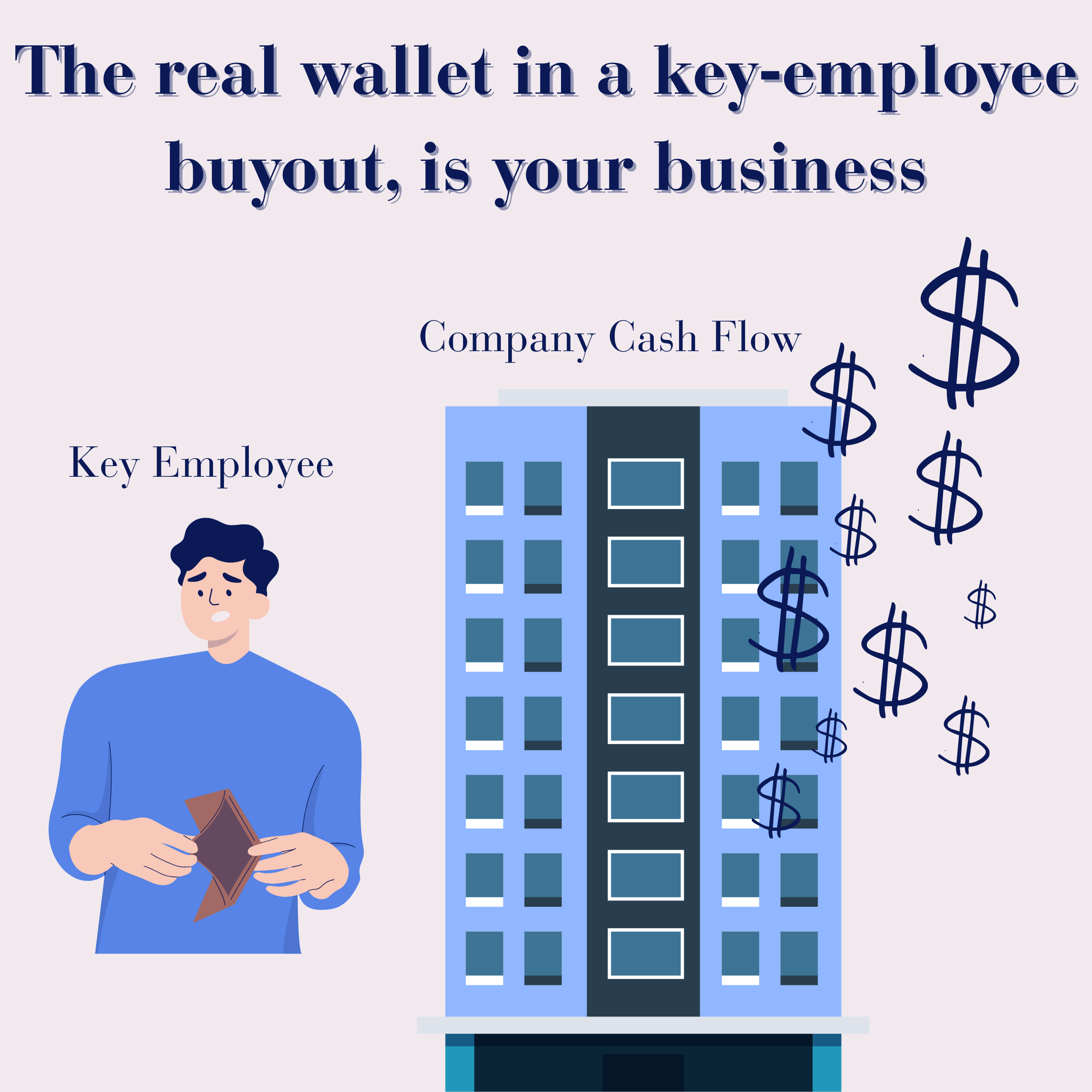
In many internal business exit planning strategies, your employee’s personal savings are not what buys your company. The company’s future cash flow does.
So instead of asking:
“Do they have the money to buy me out?”
start asking:
“Can this business reliably generate the cash to pay me over time once I’m no longer in the driver’s seat every day?”
Once you start thinking that way, a key‑employee sale stops feeling impossible and starts looking like a structured business transition planning problem we can solve.
How a Cash‑Flow‑Funded Sale Actually Works
Let’s keep this simple and practical. In a typical internal sale to a key employee, the basic pieces look like this:
You and your advisors agree on a reasonable value for the business.
Your key employee agrees to buy your ownership interest over time.
They sign a promissory note to you.
The company’s profits fund the payments on that note over several years.
You’re still selling your business. You’re just doing it gradually instead of expecting one big, all‑cash check at closing.
You’re still selling your business. You’re just doing it gradually instead of expecting one big, all‑cash check at closing.
Think about how your company works today:
Right now, its cash flow pays you through salary and distributions.
After the plan begins, that same cash flow slowly shifts to paying you as the exiting owner, while your key employee steps fully into your role.
This is where strong succession planning, strong cash flow, and clean financials really matter. The healthier and more independent the company is, the easier it is for:
The business to support payments to you, and
Your key employee to succeed as the new owner.
When you see your company as the “wallet” that funds your exit, you open up far more options for selling to the people who already know and care about your business the most.
What Changes for You as the Owner
From Paycheck to Payment Stream
Instead of a traditional paycheck, you receive scheduled installment payments. For a period, those payments can often feel very similar to what you took home before—you’re just being paid as the seller instead of as the CEO.
From Daily Operator to Paid Guide
You don’t have to disappear overnight. Healthy succession planning lets you stay involved as a mentor and advisor while your key employee grows into full control.
Mindset Reframe: Risk Managed, Not Eliminated
It’s normal to worry:
“What if profits drop?”
“What if they can’t run it without me?”
Those are real concerns, and they’re exactly why deal structure and preparation matter. In the next sections, we’ll look at common ways to sell to a key employee and how to reduce your risk when you carry the note.
Four Practical Ways to Sell to a Key Employee
Option 1: Long‑Term Installment Sale
Selling Over Time Using Future Cash Flow
A long‑term installment sale is the simplest version of “the business pays you out.”
Here’s the basic idea:
You and your advisors agree on a fair value for the company.
Your key employee signs a promissory note to buy your ownership.
They pay you over time—often 7–10 years—at a reasonable interest rate.
The company’s profits fund those payments.
Pros:
Makes the deal possible when key employees have limited cash.
Can be relatively straightforward to understand and explain.
Cons:
You receive little to no cash at closing.
You carry more risk if profits drop or the new owner struggles.
For many owners, this is a good starting point for business exit planning conversations, but not always the final answer.
Option 2: Leveraged Management Buyout
When a Bank Helps You Sell Your Business to Management
If you’ve ever wondered “how to sell a business to your management team using outside financing,” this is usually what people mean. In a leveraged management buyout:
A bank (and sometimes an investor) lends money to the company or to a buyer entity.
That money is used to buy your shares.
You may still carry a smaller seller note for the remaining balance.
This tends to fit companies with:
Strong, predictable cash flow.
Clean financial statements and systems.
Assets or contracts a lender feels good about.
You get more cash at closing, but the company takes on debt to make it happen.
Option 3: ESOP and Employee Share Ownership (High‑Level Only)
Where an Employee Stock Ownership Plan Might Fit
An employee stock ownership plan (ESOP) is a type of employee share ownership plan where a trust owns stock on behalf of employees. Over time, employees earn shares in their retirement accounts as the ESOP buys out your stock.
ESOPs can be a powerful business transition planning and tax tool for some larger, stable companies, but they come with:
Higher setup and ongoing costs.
More regulatory complexity.
For most owners, I treat ESOPs as one advanced business exit planning option to explore with specialized advisors, not the default route for a key‑employee sale.
Option 4: Modified / Two‑Phase Buyout (The Workhorse Strategy)
Start Small, Then Sell the Rest When They’re Ready
This is the structure many mid‑sized owners end up liking most.
Phase I: Test and Handcuff
You sell a minority slice (often non‑voting) at an affordable price.
Key people become true owners and start building equity.
They’re economically “handcuffed” to the company in a good way, they win when the business grows.
Phase II: Complete the Buyout
Once they’ve proved they can run the company and the numbers look lender‑friendly:
You sell the remaining interest.
The deal may blend bank financing with a seller note.
Why owners like it:
You test successors before fully handing them the keys.
You begin to step away from your business on your own timeline.
You often improve and maximize your business value along the way, because everyone is working toward the same goal.
How to Reduce Your Risk When You Carry the Note
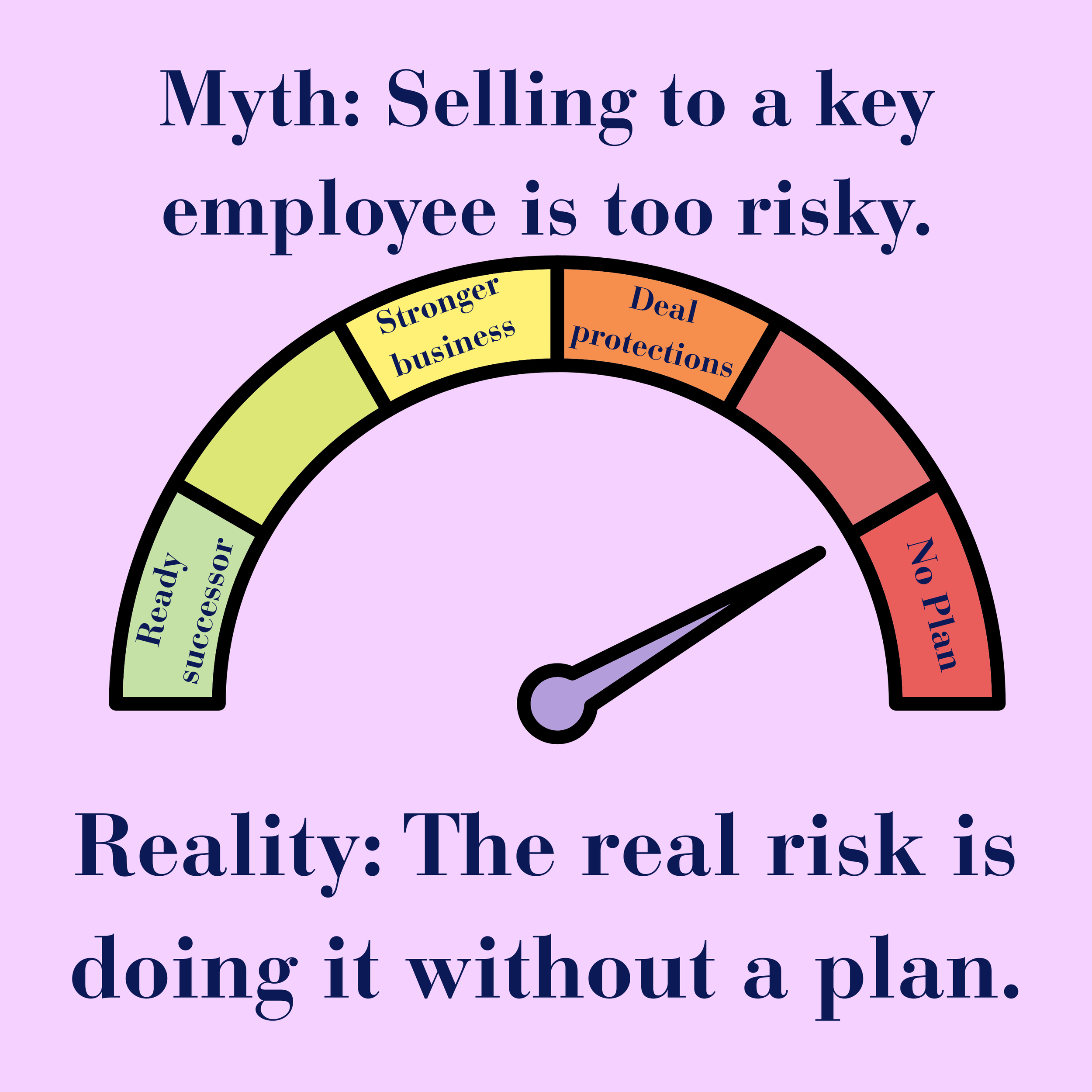
When you sell to a key employee using an installment sale, a management buyout, or even an ESOP‑style structure, you do accept some risk. Smart business transition planning doesn’t pretend that risk isn’t there, it manages it so you can feel comfortable moving forward.
Protecting Your Payments
You can lower your risk by tightening the deal terms. Common protections include:
Reasonable valuation and clear documentation. The price needs to make sense based on the numbers, not guesswork.
Security interest in stock and key business assets. If payments stop, you have a clear path to reclaim value.
Personal guarantees from the buyer. Your key employee has real skin in the game.
Performance triggers. For example, you keep voting control or a board seat until certain revenue or profit levels are met.
These tools don’t remove all risk, but they give you leverage and options if the business stumbles.
Clean Up the Business Before It Becomes the Wallet
If the company’s cash flow is going to fund your exit, you want that “wallet” to be as full and predictable as possible. That’s where “maximize my business value” stops being a slogan and becomes a checklist:
Improve profitability and smooth out cash flow.
Reduce dependence on you personally.
Diversify key customers, suppliers, and revenue streams.
This is exactly the kind of growth and business exit planning work we focus on with owners preparing for a key‑employee sale.
Proving They Can Run the Business Without You
Good succession planning means test‑driving your successors before ownership changes hands. Ask yourself:
Do they already lead the team day to day?
Do they understand the financials, not just operations?
Would a lender look at their resume and feel confident?
If the answer is “not yet,” that’s not a deal‑breaker, it just means we build a development plan before we build a transaction.
The Right Team Around Your Deal
You don’t have to design all of this alone. Most owners need:
A CPA, attorney, lender, and valuation professional.
Someone coordinating the whole picture so details don’t slip through the cracks.
That “hub” role, bringing everyone together around your goals, is exactly where the SCOTT Method shines.
How the SCOTT Method Turns Ideas Into Action
From “Some Day” to a Step‑by‑Step Exit Roadmap
Everything we’ve talked about—using your company as the wallet, choosing the right structure, and managing risk—fits inside my SCOTT Method for business exit planning. SCOTT stands for Strategic Company Optimization & Transition Tactics.
Together, we’ll move from “I should think about this” to a clear roadmap that includes:
Successor and buyer preparation, including key‑employee readiness.
Operational and financial due diligence.
I’m here to act as the conductor so you don’t have to manage a scattered advisory team on your own.
Your Next Steps
Ready to Explore a Key‑Employee Exit?
If you’re actively considering selling to a key employee (or key employee group) in the next 3–5 years, schedule a consultation to talk through what’s realistic.
Not Ready to Talk Yet? Start Here:
Take the Business Exit Planning Assessment.
Download the 3–5 Year Business Exit Checklist.
Who on your team could realistically own this business one day?